
AI search is changing how content gets discovered, as ranking on Google no longer guarantees visibility in AI responses. The CITABLE framework gives you a structure for closing that gap:
- Most of it is good SEO practice, but Answer-First structure is the one element most content is still missing.
- Schema markup is underused and worth implementing regardless of AI visibility goals.
- GA4 now has a native AI Assistant channel group – set up your own alongside it to compare data as it rolls out.
It’s all over LinkedIn: SEO is dead, AI rules the roost. Slightly dramatic.
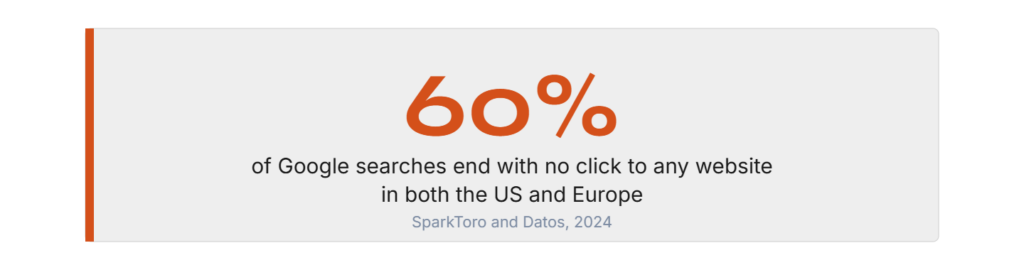
Though I agree that there is a shift happening but we’ve seen that over the last few years already. SEOs have all seen that less people are clicking through to sites, they are getting their information direct from within ChatGPT or Google’s AI Overviews. Even back in 2024, 60% of all Google searches resulted in no clicks.
The ecommerce space isn’t safe from this either, with buyers asking about products within their preferred AI tool instead of Googling.
And while the basics of good SEO will give you a platform to build on, and you might be hitting out the park right now with organic traffic…. that unfortunately doesn’t guarantee your visibility in AI responses.
While getting your brand mentioned across very citable sources forms a large part of that, today I’m covering how to actually improve your site content by making it more citable.
What is AEO and where does CITABLE fit in?
Answer Engine Optimisation (AEO), where you’re optimising content so that the AI platforms can cite and recommend your brand. And one of the emerging frameworks for improving not only your content but how you present that to your users, is the CITABLE framework.
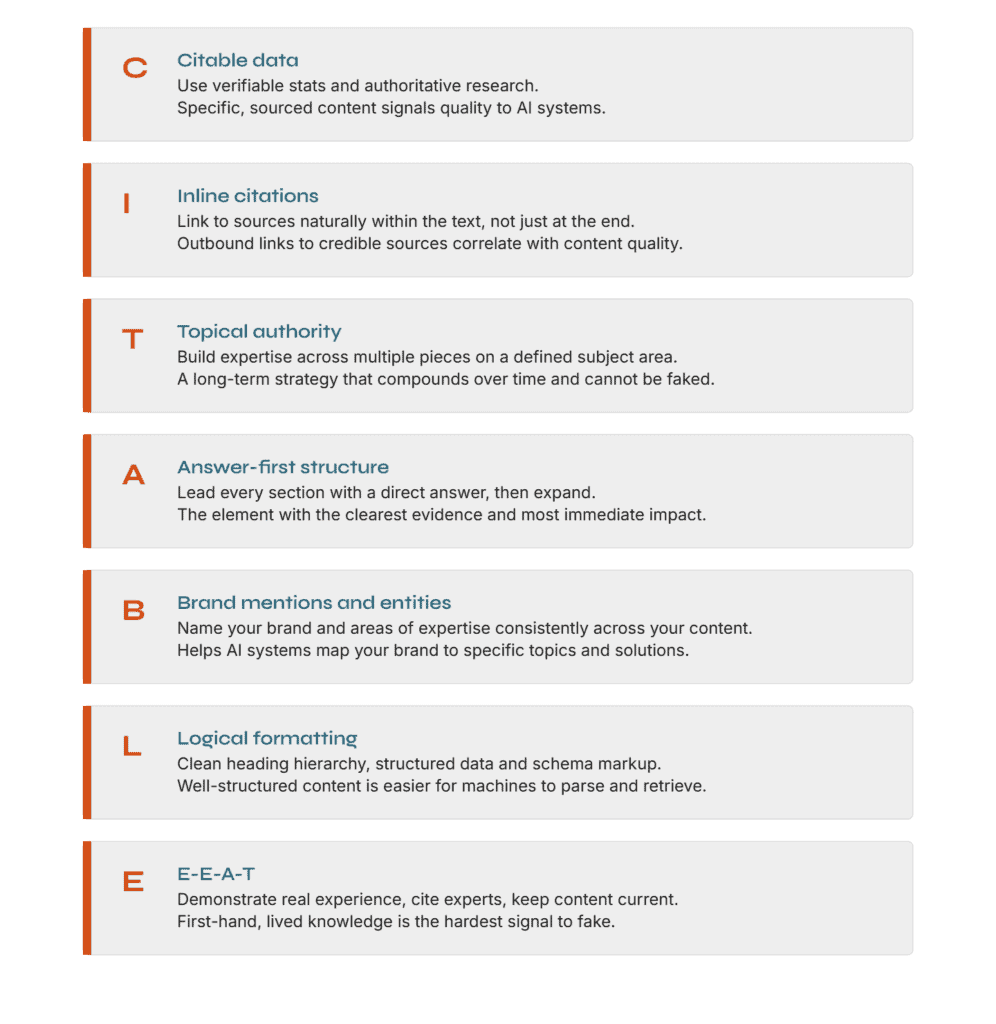
I first found this mentioned on the Discovered Labs website, with the strategy consisting of seven critical pillars (strap in, we’re adding another acronym to the digital marketing landscape):
- C – Citable Data
- Make sure that all your data is verifiable. You need to show that you’re using original statistics and really authoritative research when you’re creating your content. The AI models are taught to favour content that is clear, specific and well-structured.
- Assertions are a no-no, it is stats and verifiable claims that are a proxy for quality.
- I – Inline Citations
- Follows on from the previous point, where you should then link to your data sources. Add your links naturally within your text to make them contextual (and not just a list of sources at the end of your articles).
- T – Topical Authority
- You want to establish yourself as an expert for a specific subject. You’re going to be creating multiple articles to cover different aspects of that subject, and in time you’ll become a recognised entity on that topic. This will be your long-term strategy, built up over time and can’t be faked.
- A – Answer-First Structure
- The antithesis of the clickbait articles that have soured the internet experience for far too long. Instead of having to read through 2,000+ words of content to get to the point of an article, you start with a simplified version of the answer and then use the rest of the article to support it.
- B – Brand Mentions & Entities
- AI systems compile maps of entities (brands, people, products, concepts etc) and the relationships between them. To make your brand easier to place on those maps, you need to first consistently use your brand name along with your areas of expertise within your own site content. That, combined with mentions on third-party sites, will help build that association.
- L – Logical Formatting
- One of the SEO classics really. This includes having a clean HTML hierarchy, proper heading structures and structured data markup. Think about how to best present certain data points to your users, for example you could use a table if you’re comparing different data points, or a bulleted list for you know…. lists. Use your heading formats logically by using an H1 for the main page title, H2s for main sections, H3s for subsections and so on.
- Schema / structured data markup has been really pushed hard as a significant signal for AI crawlers, which feels odd since this has been recommended forever as part of regular SEO optimisations. Structured data provides more context to various data points, making search engines guess less as to what your pages are displaying.
- Think product schema, localbusiness, author and article schema.
- E – E-E-A-T (Experience, Expertise, Authoritativeness, Trustworthiness)
- This is mostly about providing credentials. When you’re putting out content, crawlers need to know that you are qualified to be providing information / opinion for that specific subject.
- This is especially important around certain industries, for example “Your Money or Your Life” topics (YMYL) around finance or health topics. Using author schema will provide context as to how qualified you are to write about certain topics.
- Trustworthiness is handled by simply ensuring your site is technically healthy
How I’ve applied this to my own content
To be honest, I didn’t need to do much to fit into this framework. That’s not me bragging, most of the CITABLE framework should be part of any SEO’s toolkit.
The one item that I needed to specifically tweak my regular template for, is the Answer-First Structure.
And I understand why this was never something that I would think to incorporate. Content requirements included hitting a certain word count, for users to spend a certain amount of time on an article. If we’re providing the answer upfront, users would probably read that and leave. Also if that is the only section that would be read, then spending hours on creating a 1,000 or 2,000+ word article would be a waste of time.
On the other hand, you have the article format of asking a question, using most of the article to explain different aspects of the question – then end with a quick answer. That’s infuriating. Over the years I’ve learned to just scroll down to the bottom and get the answer that I needed. Which means most of the content is not read, and I don’t spend a long time reading the article.
So two different scenarios, but the same outcome.
Only difference is that in the Answer-First scenario, there’s less frustration. It’s great that this is recommended for AI crawlers, though truthfully I’m happier with the boost in user experience. The user gets the information they need much faster, and there is extra detail to that answer if they need it.
So, what to change or add? The first thing I would need to do is finish this article. My opening paragraph would be the summary of this entire article, which means I would need to complete the copy. To present this, I would be using a BLUF (Bottom Line Up Front) format.
BLUF has its origins in military communication where we get the most critical information first. So each article would need to start with a section that shares the key takeaways, before we dive into the full story. If the BLUF introduction is done right, then it should be able to stand alone and provide the complete meaning of the article.
This is my planned format for that standalone answer / summary of whatever the article promises. An opening paragraph of 40 to 60 words, split into to 2 or 3 sentences. It would also need to be visually distinct from the rest of the copy.
I had a Claude session to refine the design for this block, and implemented the addition of a custom HTML block via Claude Code. So if an article warranted a “Key Takeaways” block, I would then manually add a block, specify my custom styling class – and the content would be added and auto-formatted.

I then went back to each of my articles to add the new summary block if needed. Note that this is still a low-visibility blog and is an experiment for me and not a proven playbook. I have not yet seen any noticeable traffic from AI platforms but am hoping to build up that traffic channel. Improving my content format now can only be beneficial down the line.
The tracking problem
Honestly, measuring AI visibility is still immature. If you’re just using GA4, here is what referral data you are able to currently receive (and what not) from the larger platforms):
| Platform | Contains Referrer Data | Does Not Contain Referrer Data |
|---|---|---|
| ChatGPT | Source links & search results | In-content links on paid accounts |
| Claude | All link types | – |
| Copilot | Web | Windows |
| Grok | – | Never passes referrer data |
| Perplexity | Web | Desktop app |
If no referrer information is passed along, it’s seen as Direct traffic.
If you have the budget for paid tools like Semrush’s AI Visibility Toolkit (or Otterly and Profound) then more information is available, but generally we’re not operating with a lot of supporting data here.
Thankfully Google just launched a new default channel group for AI platforms within Google Analytics called ‘AI Assistant’. This provides more data on how users are discovering your site via popular AI chatbots.
Before that rolls out to all markets, you could set up a custom channel group by filtering to session source names that included the largest AI platforms.
While providing some information, it has its limitations. The data isn’t always reliable, and as mentioned some traffic will end up being attributed to Direct Traffic. This also doesn’t provide any real context for the recorded traffic, for example:
- Which prompt led the user to your site?
- What content from your site was cited?
So tools exist but this is still early days, and we’re not able to see the full picture yet. I’m going to be working in-depth with paid AI visibility tools soon and will share my experiences at a later stage.
Three things worth doing now
1. Implement the Answer-First Structure
I implemented this first as it was the one element that was definitely missing from my blog articles, with potential for the most immediate impact. Again, I love that this also just improves the user experience.
2. Set up AI referral tracking in GA4
Yes I’m still recommending setting this up despite the fact that Google has just launched their own AI assistant channel group. This was only announced on 19 May 2026 and I expect this to roll out gradually to all markets. I will move the priority order of my custom data channel as soon as the official AI assistant is available on my property, and see if it’s capturing all relevant data.
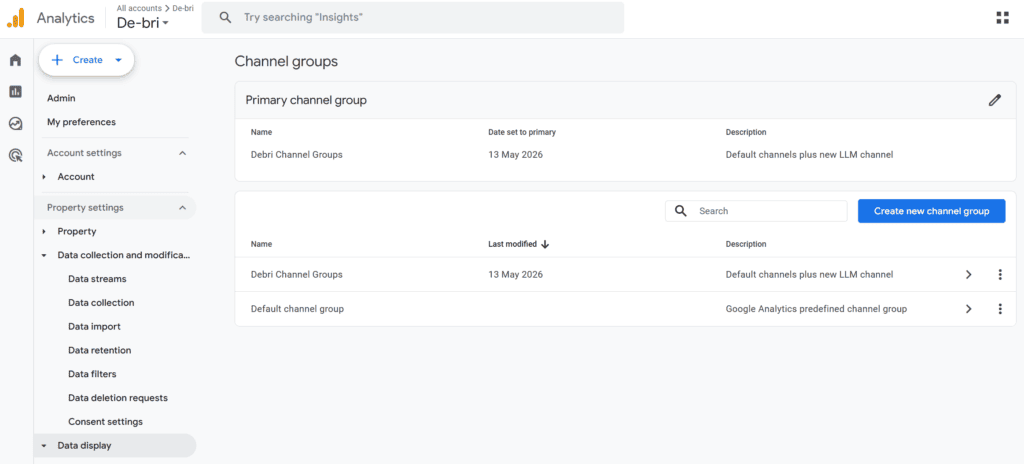
To set up this channel, access a Google Analytics 4 property you want to track AI traffic for. Then:
- Go to Admin → Data Display → Channel Groups
- Click “Create new channel group”
- Specify a new group name and (optionally) provide a description
- Click “Add new channel”
- Provide a channel name, and specify this rule:
Source matches regex: chatgpt\.com|chat\.openai\.com|perplexity\.ai|copilot\.microsoft\.com|gemini\.google\.com|claude\.ai|you\.com|phind\.com|bing\.com|deepseek\.com- Save the channel, save the group
- Now look at the order of all your traffic channels. GA4 actually works through the channel list in order, assigning each session to the first channel rule it matches
- Direct is processed first, then each channel below it in sequence.
- This is why position matters, and why I’ve placed my custom AI Referral channel above the generic Referral channel. This means that any AI sources that pass referrer data are captured and counted separately before the remaining referral traffic is grouped together
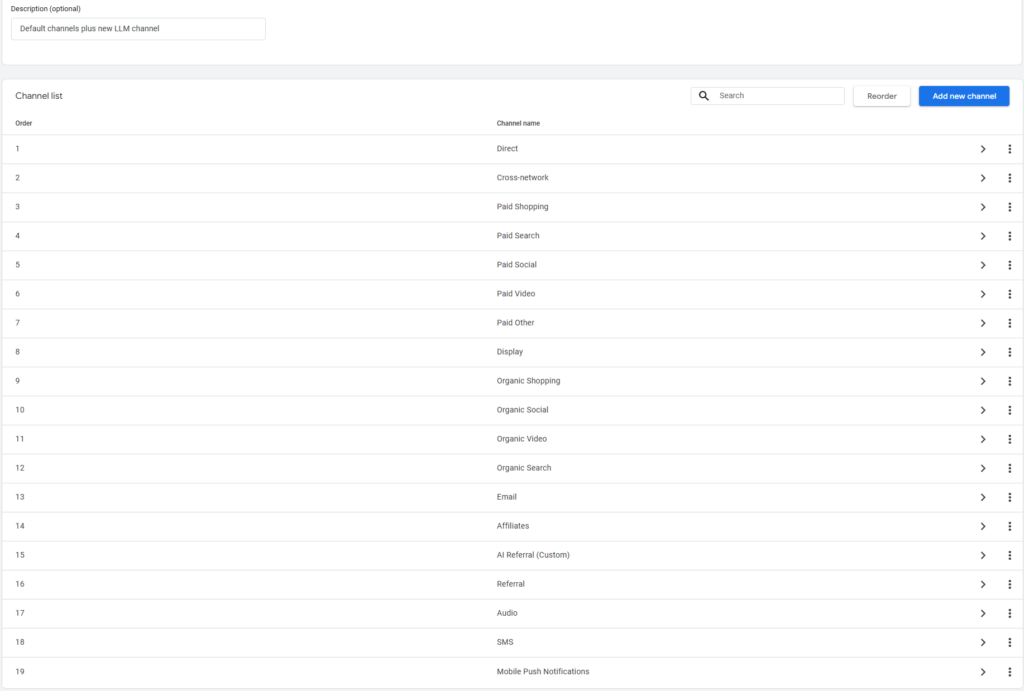
- In the “Primary channel group” section, set your new group as the default. This will ensure that GA4 will be default use this channel (with your new AI channel) as the default for all reports
- Note that the default “Session default channel group” dimension will now be replaced by “Session primary channel group (Your custom group name)”
3. Audit your top pages for logical formatting
At the least I would recommend reviewing your top-performing pages to ensure that they have a clean heading hierarchy and check if any relevant schema can be added to add more context for AI crawlers.
The reason I chose these three points from the entire CITABLE framework is that you can do these changes right now. The other points (like building topical authority and third party mentions) have to be built over time with a clear strategy.
SEO isn’t dead. It’s just got a new audience to cater for.